


Fire safety is a critical concern in every home, office, factory, and public building across Pakistan. With rapid urbanization, increasing industrial activity, and growing awareness of fire hazards, the demand for reliable fire detection systems has surged dramatically over the past decade. Among the many fire safety products available in the Pakistani market today, conventional smoke detectors particularly those manufactured in China have emerged as the most popular and widely adopted choice for both residential and commercial applications.
From the bustling commercial districts of Karachi and the industrial zones of Lahore to the residential neighborhoods of Islamabad and Rawalpindi, you will find Chinese conventional smoke detectors installed in thousands of buildings. But what exactly makes these devices so popular? What advantages do they offer? And where can you find the best quality products?
In this comprehensive guide, we will explore everything you need to know about conventional smoke detectors in Pakistan, with a special focus on why Chinese-manufactured models dominate the market. If you are looking to purchase high-quality conventional smoke detectors for your property, you can explore a wide range of certified products at Fire Safety & Security Shop — one of Pakistan’s most trusted fire safety equipment suppliers.
Understanding Conventional Smoke Detectors
Before diving into why Chinese models are so popular, it is essential to understand what a conventional smoke detector is and how it works. A conventional smoke detector is a fire detection device that operates as part of a conventional fire alarm system. Unlike addressable fire alarm systems where each device has a unique electronic address, conventional systems divide the protected building into multiple zones, with each zone connected by a single circuit.
When a smoke detector in a particular zone detects the presence of smoke or fire, it triggers the alarm panel to indicate which zone is affected. This zonal indication allows emergency responders and building occupants to quickly identify the approximate area of the fire and take appropriate action.
How Conventional Smoke Detectors Work
Most conventional smoke detectors use one of two primary detection technologies:
- Ionization Detection: Uses a small amount of radioactive material to ionize air in a sensing chamber. When smoke particles enter the chamber, they disrupt the ionized air current, triggering the alarm. This technology is highly effective for detecting fast-flaming fires.
- Photoelectric (Optical) Detection: Uses a light beam and a photosensor. When smoke particles enter the detection chamber, they scatter the light beam onto the photosensor, which then triggers the alarm. This method is particularly effective for detecting slow, smoldering fires that produce significant amounts of smoke before actual flames appear.
Many high-quality conventional smoke detectors available in Pakistan today combine both technologies a configuration known as multi-sensor or dual-sensor detection to provide comprehensive coverage against all types of fires.
The Pakistani Fire Safety Market: An Overview
Pakistan’s fire safety market has grown considerably in recent years, driven by several key factors. Government regulatory requirements, increased insurance mandates, high-profile fire incidents that highlighted the need for better safety infrastructure, and growing public awareness have all contributed to this growth.
According to industry estimates, Pakistan’s fire safety equipment market has been growing at approximately 8 to 12 percent annually. The demand for conventional fire alarm systems including conventional smoke detectors is particularly strong in sectors such as textile manufacturing, commercial real estate, hospitality, healthcare, and educational institutions.
Why Conventional Systems Remain Dominant
While addressable fire alarm systems offer more advanced features and precise fault detection, conventional fire alarm systems and by extension, conventional smoke detectors continue to dominate Pakistan’s market for several important reasons:
- Lower initial investment and installation costs
- Simpler installation and maintenance requirements
- Well-established technology familiar to local electricians and safety engineers
- Availability of compatible components from multiple suppliers
- Adequate performance for small to medium-sized buildings
- Easier troubleshooting and faster repair times
For small businesses, residential apartments, warehouses, and mid-sized commercial properties across Pakistan, conventional smoke detectors offer a practical, cost-effective solution that meets fire safety standards without requiring significant capital expenditure.
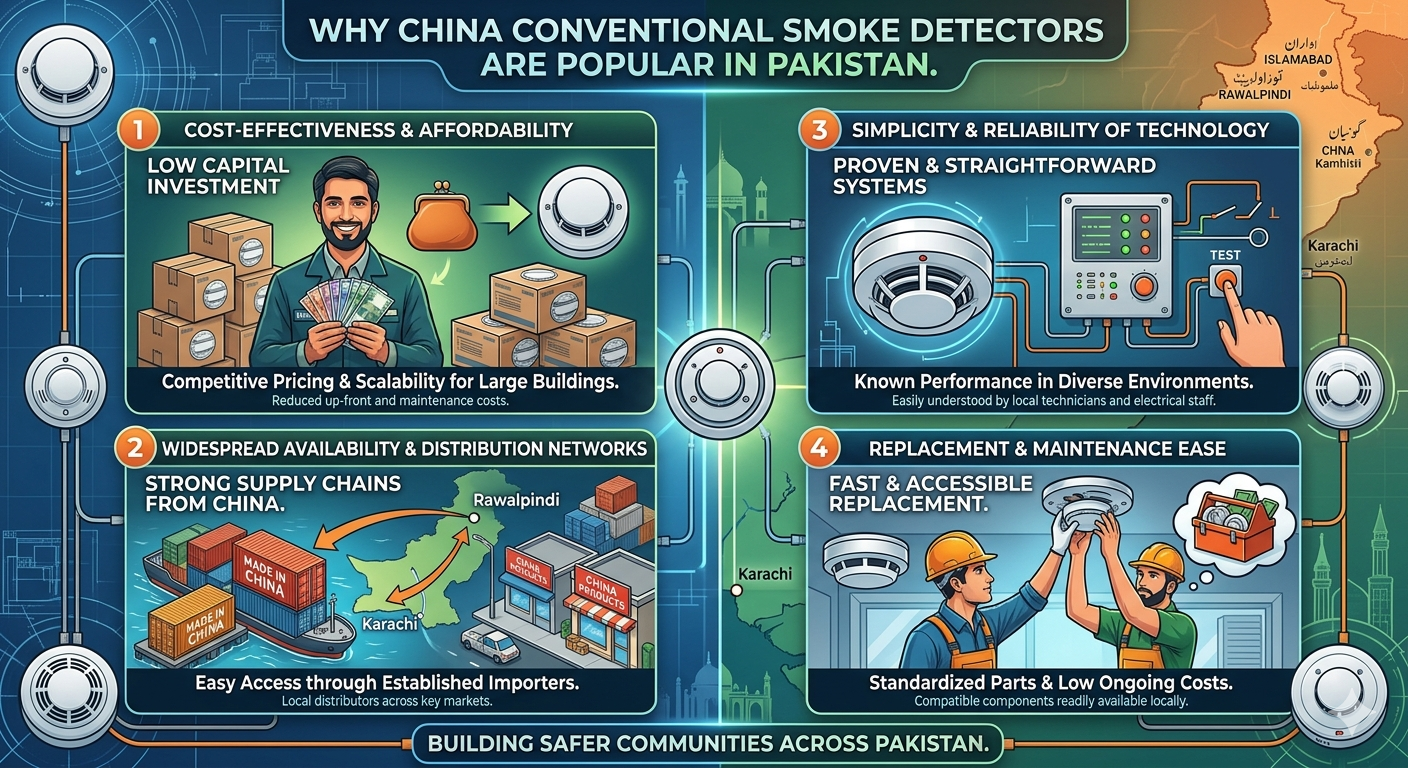
Why Chinese Conventional Smoke Detectors Are Popular in Pakistan
When Pakistani consumers and businesses choose conventional smoke detectors, Chinese-manufactured products overwhelmingly dominate the selection. This preference is not accidental — it reflects a combination of economic realities, quality improvements, supply chain reliability, and market dynamics that have developed over many years.
1. Highly Competitive and Affordable Pricing
The most immediately apparent reason for the popularity of Chinese conventional smoke detectors in Pakistan is their price. Chinese manufacturers benefit from enormous economies of scale, advanced manufacturing technology, low labor costs, and highly competitive domestic supply chains. These factors combine to allow Chinese companies to produce fire safety devices at significantly lower costs than Western or Japanese competitors.
In Pakistan, where budget constraints are a significant consideration for most residential and commercial buyers, this price advantage is decisive. A Chinese conventional smoke detector that meets international quality standards can cost anywhere from 30 to 60 percent less than equivalent products from European or American brands. For large projects requiring the installation of hundreds or thousands of detectors across a building complex or industrial facility, this price difference translates into substantial savings.
This affordability does not mean poor quality. Over the past two decades, Chinese manufacturers have invested heavily in improving their manufacturing processes, implementing quality management systems, and obtaining international certifications. Today, many Chinese smoke detectors carry certifications from recognized bodies such as CE (European Conformity), UL (Underwriters Laboratories), and EN54 the same standards applied to detectors from established Western brands.
2. Wide Availability and Strong Supply Chain
Chinese conventional smoke detectors are readily available throughout Pakistan, from major metropolitan areas to secondary cities and even smaller towns. The strong commercial relationship between Pakistan and China, supported by the China-Pakistan Economic Corridor (CPEC), has further strengthened supply chains and made it easier for Pakistani importers to source fire safety products directly from Chinese manufacturers.
Major fire safety equipment distributors and suppliers across Pakistan maintain regular stock of Chinese conventional smoke detectors, ensuring that contractors, builders, and facility managers can obtain the products they need without long lead times. This availability is in sharp contrast to some European or American brands, which may require lengthy import processes, higher customs duties, and more complex logistics.
For urgent projects or emergency replacements, the ability to procure conventional smoke detectors quickly from local suppliers or through established import channels is a significant practical advantage.
3. International Quality Certifications
A common misconception is that affordable Chinese fire safety products are necessarily of inferior quality. This perception has been increasingly challenged by the reality of modern Chinese manufacturing. Leading Chinese smoke detector manufacturers have invested substantially in research and development, quality control, and international certification processes.
Many Chinese conventional smoke detectors available through reputable suppliers in Pakistan carry internationally recognized certifications including CE marking (indicating compliance with European safety standards), EN54 certification (the European standard for fire detection and fire alarm systems), ISO 9001 quality management certification, and in some cases, FM Approval or UL listing for markets that require North American standards.
These certifications provide assurance that the products have been tested and verified to meet established performance benchmarks for sensitivity, reliability, environmental resistance, and long-term operation. When purchasing from established suppliers, Pakistani buyers can access certified products that offer genuine fire protection performance.
4. Compatibility With Existing Systems
Pakistan’s existing fire alarm infrastructure has largely been built around conventional systems, many of which were installed using Chinese components over the past decade or more. New construction projects often continue to use conventional systems for compatibility with these established systems and the skills of locally available installation technicians.
Chinese conventional smoke detectors are typically designed to be compatible with a wide range of conventional fire alarm control panels, including those manufactured in China, Europe, and other regions. This broad compatibility makes it straightforward for Pakistani contractors to integrate Chinese detectors into new or existing fire alarm systems without compatibility concerns.
5. Diverse Product Range for Different Applications
Leading Chinese manufacturers offer an extensive range of conventional smoke detectors designed for different environments and applications. Pakistani buyers can choose from:
- Standard optical smoke detectors for general office and residential use
- Heat detectors for kitchens, boiler rooms, and other high-heat environments where smoke detectors would generate false alarms
- Combined smoke and heat detectors for comprehensive detection coverage
- Weatherproof and IP-rated detectors for outdoor or harsh indoor environments
- High-sensitivity detectors for clean rooms, server rooms, and areas with valuable assets
- Duct-mounted smoke detectors for integration with HVAC systems
This diversity allows Pakistani fire safety engineers and contractors to select the most appropriate detector for each specific application within a building, ensuring optimal performance and minimizing false alarms.
6. Ease of Installation and Maintenance
Chinese conventional smoke detectors are generally designed for straightforward installation using standard wiring practices. Most devices use simple two-wire or four-wire connections to the conventional fire alarm control panel, making them easy to install for trained electricians and fire alarm technicians in Pakistan.
Maintenance requirements are also typically simple and well-documented. Periodic testing, cleaning, and visual inspection are the primary maintenance tasks for conventional smoke detectors, and Chinese manufacturers generally provide clear documentation and technical support for their products. Replacement parts and compatible accessories are readily available through local fire safety suppliers.
7. Support from the CPEC Economic Relationship
The China-Pakistan Economic Corridor has not only transformed Pakistan’s infrastructure but has also deepened commercial ties between the two countries. The expanded trade relationship has reduced barriers to importing Chinese goods, including fire safety equipment, into Pakistan. Lower tariffs on certain Chinese products, improved shipping infrastructure, and stronger business relationships between Chinese manufacturers and Pakistani importers have all contributed to making Chinese conventional smoke detectors even more accessible and affordable.
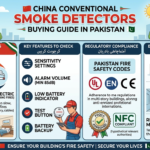
Key Features to Look for in Conventional Smoke Detectors
When selecting conventional smoke detectors in Pakistan, whether for a residential building, commercial office, industrial facility, or any other application, there are several key features and specifications to consider:
Detection Technology
Choose between optical (photoelectric), ionization, or dual-sensor detectors based on the specific fire risks in the protected area. For general use, optical detectors are widely recommended because they are effective against the most common type of fires and generate fewer nuisance alarms from cooking fumes and steam. For areas with a high risk of fast-flaming fires, ionization or dual-sensor detectors may be more appropriate.
Operating Voltage and Current Consumption
Ensure that the detector’s operating voltage and current consumption are compatible with your fire alarm control panel. Most conventional smoke detectors operate on 12V or 24V DC systems. Always verify compatibility before purchasing to avoid system integration issues.
Environmental Ratings
For installations in challenging environments such as warehouses, manufacturing facilities, outdoor covered areas, or locations exposed to dust, humidity, or temperature extremes choose detectors with appropriate IP (Ingress Protection) ratings and operating temperature ranges. Chinese manufacturers offer a range of detectors designed specifically for demanding environments.
Certifications and Standards Compliance
Always verify that the conventional smoke detectors you purchase carry relevant international certifications. In Pakistan, CE marking and EN54 certification are widely recognized indicators of quality and performance. Look for products from manufacturers with documented quality management systems such as ISO 9001.
Sensitivity Settings
Some advanced conventional smoke detectors offer adjustable sensitivity settings, allowing installers to fine-tune the detector’s response threshold to suit the specific environment. This capability can be particularly valuable in environments prone to nuisance alarms, such as dusty warehouses or areas with moderate cooking fumes.
Where to Buy Conventional Smoke Detectors in Pakistan
With the growing demand for fire safety equipment in Pakistan, numerous suppliers offer conventional smoke detectors. However, quality and reliability vary significantly between suppliers, making it important to choose a reputable source.
One of the most trusted and comprehensive sources for conventional smoke detectors and other fire safety equipment in Pakistan is the Fire Safety & Security Shop. Their dedicated product page for China-manufactured smoke detectors offers a carefully curated selection of certified, high-quality conventional smoke detectors that are suitable for a wide range of applications across Pakistan.
When purchasing conventional smoke detectors in Pakistan, consider the following factors to ensure you get the best value and performance:
- Purchase from established suppliers with a proven track record in the fire safety industry
- Request product documentation including certifications, test reports, and technical specifications
- Ensure the supplier can provide after-sales support, technical assistance, and warranty service
- Choose suppliers with a comprehensive product range so you can source all necessary components from one reliable source
- Consider suppliers who can provide installation guidance or connect you with certified fire alarm installation contractors
Installation Best Practices for Conventional Smoke Detectors in Pakistan
Proper installation is as important as product quality when it comes to the effective performance of conventional smoke detectors. Poorly installed detectors regardless of their quality may fail to detect fires reliably or generate excessive false alarms. Here are some key installation best practices:
Follow National and International Standards
Fire alarm system installation in Pakistan should comply with relevant national and international standards. The National Fire Protection Association (NFPA) 72 standard, the British Standard BS 5839, and EN54 provide comprehensive guidance on detector placement, spacing, installation heights, and system design. Consult with a qualified fire safety engineer to ensure your installation meets applicable requirements.
Correct Detector Placement
Smoke detectors should generally be installed on ceilings, as smoke rises and accumulates near ceiling surfaces. In rooms with flat ceilings, detectors should be positioned away from walls and corners, where air movement is limited. In rooms with peaked or sloped ceilings, detectors should be installed near the highest point. Avoid installing detectors near air conditioning vents, fans, or other sources of strong air movement that could affect smoke distribution.
Zone Planning
Effective zone planning is essential for conventional fire alarm systems. Each zone should cover a clearly defined area of the building, and zones should be sized to allow occupants to quickly identify the area of the building where the alarm originated. In large buildings, smaller zones improve response accuracy and reduce the time required to locate a fire.
Regular Testing and Maintenance
Conventional smoke detectors should be tested regularly at minimum once every six months to verify that they are functioning correctly. Annual professional inspection and cleaning is also recommended to remove dust accumulation that can affect detector sensitivity. Keep records of all testing, maintenance, and any incidents to demonstrate compliance with safety regulations.
The Future of Conventional Smoke Detectors in Pakistan
While addressable fire alarm systems are gradually gaining ground in large, complex installations such as hospitals, shopping malls, and high-rise office towers, conventional smoke detectors will continue to play a vital role in Pakistan’s fire safety landscape for the foreseeable future.
The combination of affordability, availability, compatibility with existing infrastructure, and improving quality means that conventional smoke detectors — particularly those manufactured in China — will remain the first choice for the majority of fire protection applications across Pakistan. As Chinese manufacturers continue to invest in product development and quality improvement, the performance gap between Chinese products and premium Western brands will continue to narrow.
For Pakistani property owners, businesses, and safety professionals, this means access to increasingly capable fire detection technology at price points that make comprehensive fire protection genuinely achievable — even for projects with tight budgets.
Conclusion
The popularity of Chinese conventional smoke detectors in Pakistan is the result of a powerful combination of factors: competitive pricing, improving quality backed by international certifications, strong supply chain availability, broad compatibility with existing systems, and the deepening commercial relationship between China and Pakistan.
For Pakistani homeowners, businesses, contractors, and facility managers seeking reliable conventional smoke detectors, the Chinese-manufactured options available through reputable local suppliers represent exceptional value for money without sacrificing the fire detection performance that is essential for protecting lives and property.
Whether you are equipping a small retail shop, a large warehouse, a residential apartment building, or a commercial office complex, properly selected and installed conventional smoke detectors are one of the most important investments you can make in fire safety. The key is to source products from trusted suppliers, verify certifications, ensure correct installation, and commit to regular maintenance.
To explore a comprehensive range of certified conventional smoke detectors in Pakistan, including high-quality Chinese manufactured models, visit fireandsafetyshop.com/product/smoke-detectors-in-pakistan-china/ and find the right fire detection solution for your property today.